
Mastering Spark Plug Heat Ranges and Gap Settings Like a Pro
Release time:2026-11-17
Image Source: statics.mylandingpages.co The wrong heat range or gap settings can cost power, foul spark plugs, or destroy a piston. Both are chosen, not guessed. Heat range controls tip temperature, and gaps control spark energy delivery. Get both right, and the engine runs cleaner and stronger. Selection starts with two facts: cylinder head
The wrong heat range or gap settings can cost power, foul spark plugs, or destroy a piston. Both are chosen, not guessed. Heat range controls tip temperature, and gaps control spark energy delivery. Get both right, and the engine runs cleaner and stronger. Selection starts with two facts: cylinder head material and ignition type. A correct heat range and a matched ignition setup reward every driver.
Key Takeaways
- Choose a colder spark plug for modified engines to prevent pre-ignition and protect your engine.
- Set the spark plug gap to match your ignition type: keep the factory gap for stock systems and widen it only with high-energy ignition.
- Read your spark plugs after every change to confirm the heat range is correct and catch problems early.
Spark Plug Heat Range Basics
Heat range describes how quickly a spark plug sheds heat from its firing tip into the cylinder head. A plug with a long insulator nose runs hot because heat travels a long path to the shell. A plug with a short nose runs cold because heat escapes quickly. This single design variable decides whether the tip stays clean at low load or survives the heat of full throttle. Drivers who understand this principle make better decisions at the parts counter.
How Heat Range Numbers Work
Plug makers assign numbers to heat ranges, and the numbering direction differs by brand. NGK and Denso use higher numbers for colder plugs. Champion and Bosch reverse the scale, so a higher number means a hotter plug. The heat range of a spark plug therefore means nothing without the brand name attached. A "7" from one maker may sit close to a "22" from another. Always confirm the scale before comparing products.
The number itself reflects the length of the insulator nose and the plug's ability to transfer heat. A hot plug holds heat in the tip, which burns off carbon deposits during light-load driving. A cold plug pulls heat away fast, which protects the tip and piston from pre-ignition at high load. Neither design is better in absolute terms. Each one fits a specific operating window.
Engineers define the ideal heat range as the setting where the tip reaches roughly 500 to 900 degrees Fahrenheit under normal running. Below that window, deposits accumulate and the plug may misfire. Above it, the tip glows and can ignite the air-fuel mixture before the spark fires. That condition, called pre-ignition, can hole a piston in seconds. The correct heat range keeps the tip inside the safe window across the engine's real duty cycle.
Street vs. Race Heat Range Selection
Street engines spend most of their time at part throttle, so they need a plug hot enough to self-clean. The factory heat range usually serves this role well. A stock engine with stock compression and stock ignition rarely needs a change. Heat range selection for a daily driver should follow the manufacturer's recommendation unless modifications alter the thermal load.
Race engines live at high rpm and high cylinder pressure, and they need colder plugs to survive. The same logic applies to spark plugs for modified engines. Higher compression, advanced timing, forced induction, and nitrous all raise combustion temperatures. Each of these changes pushes the tip closer to the danger zone. Turbocharged and supercharged engines especially benefit from a step or two colder than stock. A colder plug resists pre-ignition and keeps the tip from becoming a glow plug under boost.
Builders often ask how far to step. A common rule moves one range colder for every 75 to 100 horsepower added above stock, though the rule is a starting point, not a law. A modified engine requirements list should always include a plug reading session before the final choice. The engine's own behavior gives the final answer.
Drivers sometimes install a colder plug hoping for more power. That hope is misplaced. A plug that is too cold for its application fouls at idle and low speed, and fouled plugs misfire. The misfire costs far more power than any heat range gain could deliver. Match the plug to the duty cycle, and let the dyno or the timeslip judge the result.
Reading Plugs to Confirm Heat Range
A plug reading is the professional's feedback loop. After a hard pull, the driver shuts the engine off cleanly and pulls a plug. The insulator tip color tells the story. A light tan or gray tip indicates a healthy heat range. A white, blistered, or glazed tip signals a spark plug that is too hot. A black, sooty, or wet tip points to a plug that runs too cold or an engine with a mixture problem.
Reading the ground strap adds detail. The strap should show a color change near the bend. A strap that turns blue or shows a melted edge means the plug is too hot for its application. A strap with color only near the tip suggests the plug runs cold. These signs of bad spark plug heat range appear long before piston damage, which is why regular readings pay off.
Improper heat range selection leaves evidence on the porcelain and the strap. A spark plug heat range is too hot when the porcelain looks sandblasted or the electrodes show rounding. A colder spark plug fixes the problem only if the engine truly needs it. Sometimes the real fault is lean mixture, over-advanced timing, or a cooling problem. The plug reports the symptom, and the tuner finds the cause.
Read plugs after every change to fuel, timing, or boost. A single reading beats a dozen guesses.
Different heat ranges exist because engines live in different thermal worlds. A plug that is perfect in a stock commuter can fail in a boosted track car within one lap. The tuner's job is to find the range that keeps the tip in the safe window for the engine's worst case, not its best. That discipline separates a reliable build from a broken one.
Gap Settings by Ignition Type
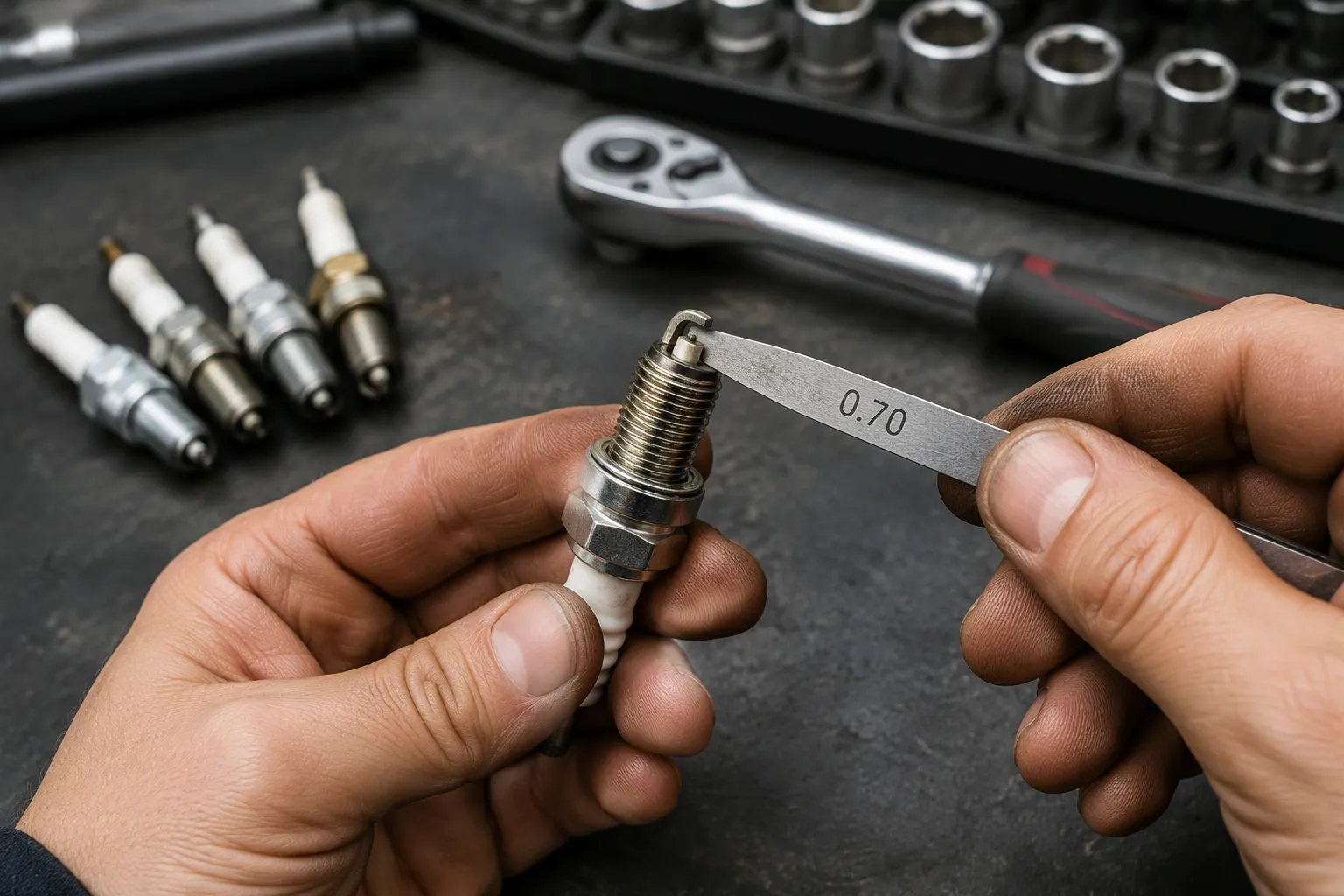
The gap between the center and ground electrode sets the voltage required to jump the spark. A wider gap exposes more of the air-fuel mixture to the spark kernel, which improves light-load combustion. A narrower gap demands less voltage, which protects the ignition system under high cylinder pressure. The ignition type decides which trade-off the engine can tolerate. A stock coil and a racing CDI box deliver very different energy levels, so the correct gap settings change with the hardware.
Stock Ignition Gap Guidelines
Factory ignition systems are engineered around a specific gap, and the service manual states that number for a reason. Most stock systems specify a gap between 0.028 and 0.044 inches, with the exact figure depending on engine family and plug type. A stock coil produces limited secondary voltage, and a gap at the wide end of the range can overwhelm it under load. The spark then finds an easier path or fails to fire at all, and the driver feels a misfire at high rpm.
Stock ignition systems pair well with the factory gap because the coil, wires, and plug boots are matched as a system. A worn plug with excessive gap growth raises the voltage demand beyond what the coil can supply. The result is a misfire that appears only under boost or at high rpm, which sends many drivers chasing fuel and timing problems that do not exist. Checking the gap at every plug change catches this wear before it becomes a drivability complaint.
Drivers who install spark plugs for modified engines sometimes widen the gap hoping for a stronger spark. That move backfires on a stock ignition. The coil cannot build enough voltage to bridge the wider gap under load, and the engine loses power exactly where the driver wanted more. The stock gap exists to keep the ignition inside its voltage budget. Respect that budget until the ignition hardware changes.
High-Energy and Racing Ignition Gaps
High-energy ignition systems change the rules. A CDI box, a high-output coil, or a multi-spark discharge delivers far more voltage and current than a stock setup. That extra energy allows a wider gap, and a wider gap exposes more mixture to the flame kernel. Racers often run gaps between 0.045 and 0.060 inches on these systems, and some combinations go wider still. The wider gap pays off in improved throttle response and more complete combustion at part throttle.
The ignition upgrade must come first. A wide gap on a stock coil produces a weak spark or no spark at all. A wide gap on a high-energy system produces a fat, reliable spark that lights the mixture with authority. The order of operations matters here, and tuners who widen the gap before upgrading the ignition usually learn that lesson the hard way.
Racing ignition systems also tolerate a colder heat range better than stock systems do. The stronger spark fires a fouled or cold plug that a stock coil would struggle to light. That combination suits spark plugs for modified engines with high compression or forced induction. The cold plug resists pre-ignition, and the hot ignition lights it reliably. Neither part works as well alone.
Boosted and nitrous engines add another variable. High cylinder pressure raises the voltage needed to jump any gap, so a gap that works at atmospheric pressure may fail under 20 psi of boost. Many tuners narrow the gap slightly on boosted applications even with a high-energy ignition. The narrower gap reduces the voltage demand and keeps the spark reliable when cylinder pressure spikes. The right gap for a boosted engine balances spark energy against pressure, and the dyno or the track confirms the choice.
Adjusting Gap Safely
Gap adjustment is a precision task, and the tools matter. A gap gauge with wire feelers measures the gap accurately, and a dedicated gapping tool bends the ground strap without stressing the center electrode. Pliers and screwdrivers damage the electrode and change the spark path. The wrong tool turns a five-minute job into a misfire diagnosis.
The adjustment procedure follows a simple sequence. Measure the gap first with the wire feeler, then bend the ground strap only, and recheck the measurement after every bend. The center electrode stays untouched throughout. A plug that needs a large adjustment may have the wrong part number, and forcing the gap invites electrode damage.
Never pry the center electrode or drop a plug onto a hard surface. A cracked insulator or a bent center electrode ruins the plug, and the damage often hides until the engine misfires under load.
Gap settings also drift over time. Electrode erosion opens the gap roughly 0.001 inches per 10,000 miles on a stock ignition, and the wear accelerates on high-energy systems. Excessive gap growth raises voltage demand until the ignition can no longer fire the plug under load. A periodic gap check catches the drift, and a fresh set of spark plugs restores the original specification. The gap is a wear item, and treating it as a permanent setting leads to a slow loss of performance.
Aluminum vs. Cast Iron Head Fitment
Cylinder head material changes the rules for plug selection. Aluminum and cast iron expand at different rates, and each material demands a specific thread design and installation approach. A plug that fits one head may damage the other. The installer must confirm the head material before choosing spark plugs for any engine.
Thread and Reach Differences
Aluminum heads require more attention during installation. The softer metal strips threads easily under excessive force. Many aluminum heads use a tapered seat or a gasket seat with a specific thread length. Cast iron heads tolerate more torque, and they often use a longer reach to position the electrode correctly in the combustion chamber. The reach must match the head depth exactly. A plug that is too short leaves the electrode recessed, which weakens the spark. A plug that is too long protrudes into the piston path and causes catastrophic damage.
Torque specifications differ by material as well. Aluminum heads typically call for 15 to 20 foot-pounds, while cast iron heads accept 20 to 30 foot-pounds. Always follow the factory torque specifications and use a calibrated wrench.
Recommended Plugs by Head Material
| Head Material | Typical Thread | Reach | Heat Range Guidance |
|---|---|---|---|
| Aluminum | 14mm or 12mm | Short to medium | One step colder on modified engines |
| Cast Iron | 14mm or 18mm | Medium to long | Stock range for stock ignition |
Aluminum heads pair well with plugs that have a gasket seat and a moderate heat range. Cast iron heads suit plugs with a longer reach and a heat range matched to the engine's compression. The ignition type still governs gap, and the head material governs thread and reach. Both factors must align before installation.
Your Complete Guide to Spark Plugs: Heat Range Selection and Fitment
Quick-Reference Table: Heat Range and Gap by Application
This complete guide to spark plugs condenses the key decisions into one view. The table below pairs common applications with a starting heat range and gap. Treat every value as a baseline, then confirm with a plug reading.
| Application | Heat Range | Gap | Notes |
|---|---|---|---|
| Stock daily driver, cast iron head | Stock | 0.035–0.044 in | Follow the service manual |
| Stock daily driver, aluminum head | Stock | 0.032–0.040 in | Use a calibrated torque wrench |
| Mild bolt-on build | One step colder | 0.035 in | Check mixture before stepping colder |
| Turbo or supercharged | Two steps colder | 0.028–0.032 in | Narrow gaps resist boost pressure |
| Racing with high-energy ignition | Two steps colder | 0.045–0.060 in | Upgrade the ignition first |
Common Fitment Mistakes to Avoid
Installers repeat a handful of errors. The first is choosing a plug by number alone. Heat range selection depends on the brand scale, so a number from one maker does not transfer to another. The second is widening gaps on a stock ignition. The coil cannot bridge the wider gap under load, and misfires follow.
A third mistake is ignoring reach. A plug that is too long strikes the piston, and a plug that is too short hides the electrode. The fourth is overtightening aluminum heads. Follow the factory torque specifications and use a calibrated wrench. Finally, many drivers skip the plug reading after installation. Without that feedback, nobody confirms the correct heat range.
Buy spark plugs for modified engines one range colder than stock, then read the plugs before trusting the choice.
Two rules govern spark plugs. Match heat range to operating conditions, and match gap to ignition type. Modified engines start one step colder than stock, while stock systems keep the factory gap. Colder plugs and a stock gap give a safe baseline. Read the plugs after every change. That feedback loop separates professionals from guessers.
FAQ
Does a colder heat range add horsepower?
A colder plug protects the engine under high load. It does not create power on its own. A plug that is too cold fouls and misfires, which costs power.
Can a driver widen the gap on a stock ignition?
No. A stock coil cannot bridge a wide gap under load. Widening the gap on factory hardware causes misfires at high rpm. Upgrade the ignition first.
How often should a driver check the gap?
Electrode erosion opens the gap about 0.001 inches per 10,000 miles. Check the gap at every plug change. Replace worn spark plugs before the ignition struggles.
spark plugs

Contact Information
Add: Building A3-306 Lugu Enterprise Square, No.27 Wenxuan Road, Changsha, Hunan Province ,China
